
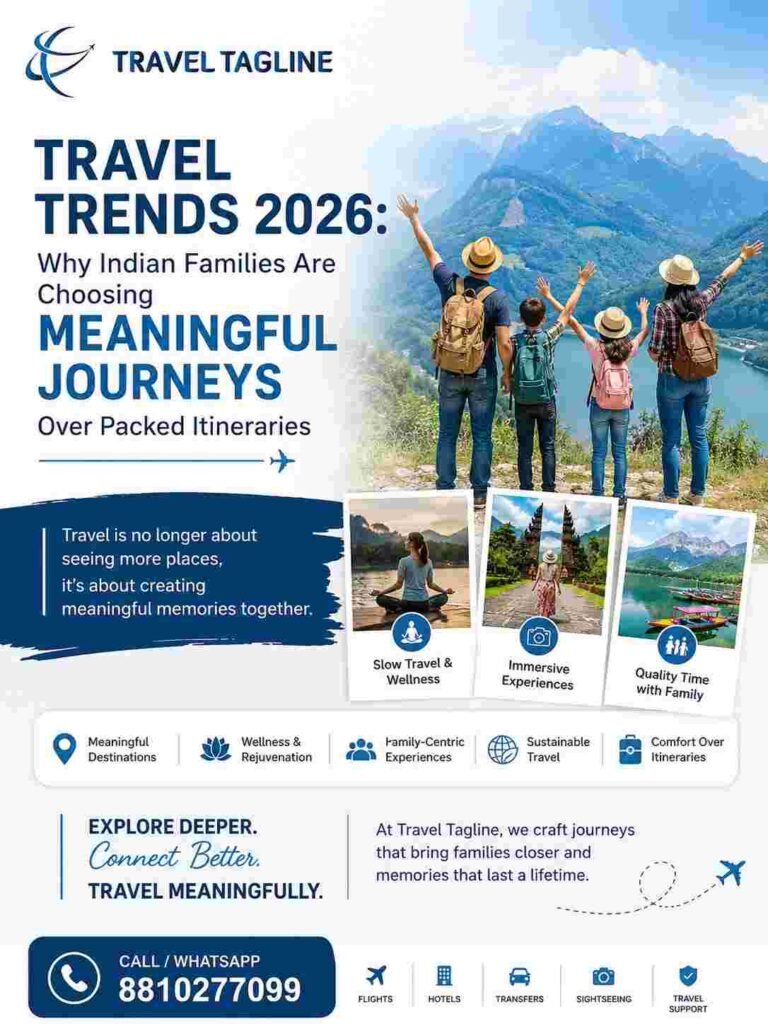
The way Indian families travel is changing rapidly. Gone are the days when vacations were all about checking off the maximum number of destinations in the shortest possible time. In 2026, a new travel trend is dominating the tourism industry: meaningful, experience-driven journeys that prioritize comfort, connection, and memorable moments.
From peaceful hill stations and wellness retreats to immersive cultural experiences and slow-paced international vacations, travelers are increasingly seeking quality over quantity. This shift is reshaping the future of travel and tourism across India and the world.
The Rise of Slow Travel
One of the biggest travel trends of 2026 is slow travel. Instead of visiting five cities in seven days, families are choosing to spend more time in one destination and truly experience local culture, food, and traditions.
Popular destinations such as Rishikesh, Coorg, Kerala, Bhutan, Bali, and Ubud are benefiting from this trend. Travelers are preferring longer stays, boutique accommodations, and authentic local experiences over rushed sightseeing schedules.
The result is less travel fatigue, deeper cultural immersion, and a more relaxing holiday experience.
Wellness Tourism Continues to Boom
Wellness tourism is no longer limited to luxury travelers. Families, couples, and solo travelers are actively planning vacations around health, mindfulness, and rejuvenation.
Destinations offering yoga retreats, Ayurvedic therapies, meditation programs, nature walks, and digital detox experiences are witnessing significant growth. Kerala remains a leader in wellness tourism, while destinations like Rishikesh, Dharamshala, Bali, and Thailand continue to attract wellness-focused travelers from around the world.
Travelers are increasingly viewing vacations as opportunities to improve mental well-being rather than simply taking a break from work.
Family Travel is Becoming More Experience-Oriented
Indian families are now prioritizing experiences that create lasting memories. Wildlife safaris, cultural performances, local cooking classes, village tours, river cruises, and adventure activities are becoming more popular than traditional sightseeing.
Parents are also looking for educational experiences that allow children to learn about history, wildlife, nature, and local cultures while traveling.
Destinations such as Jim Corbett, Ranthambore, Kerala Backwaters, Rajasthan, and Northeast India are seeing increased demand due to their ability to offer unique experiences for all age groups.
Visa-Free and Easy International Destinations are Driving Demand
Another major tourism trend in 2026 is the growing popularity of visa-free and easy-entry destinations. Families are increasingly choosing countries where travel planning is simple and stress-free.
Thailand, Malaysia, Maldives, Mauritius, Nepal, Bhutan, and Sri Lanka continue to rank among the most preferred international destinations for Indian travelers.
The convenience of reduced paperwork, shorter planning timelines, and direct flight connectivity is encouraging more first-time international travelers to explore overseas vacations.
Sustainable Tourism is Influencing Travel Decisions
Environmental awareness is influencing travel choices more than ever before. Travelers are actively seeking eco-friendly accommodations, responsible tour operators, and destinations committed to sustainability.
Many travelers now prefer local homestays, community-based tourism initiatives, and nature-focused experiences that support local economies while minimizing environmental impact.
Destinations promoting responsible tourism practices are likely to see stronger growth in the coming years.
Technology is Making Travel More Personalized
Artificial intelligence, smart itinerary planning tools, digital travel assistants, and personalized travel recommendations are helping travelers make better decisions.
Travelers can now access customized itineraries, real-time flight updates, weather alerts, destination guides, and travel budgeting tools directly from their smartphones.
The tourism industry is increasingly adopting technology to improve traveler experiences before, during, and after their journeys.
The Future of Travel and Tourism
The future of travel is not about visiting more places. It is about creating meaningful experiences, strengthening family connections, embracing local cultures, and traveling in a way that enhances well-being.
As 2026 unfolds, travelers are prioritizing comfort, authenticity, sustainability, and memorable experiences over conventional sightseeing. This transformation is creating exciting opportunities for destinations, travel companies, and tourism professionals worldwide.
For Indian families planning their next vacation, the message is clear: travel smarter, travel deeper, and focus on experiences that leave lasting memories long after the journey ends.



 Pay With Easebuzz
 Pay With Eazypay